I have course said that’s a great question, I wonder who picked up the garbage?
One of the things that child “A” noticed was that there was still garbage around the river trail this child said that “we needed to take photos of the garbage this time so that we didn’t forget” as we looked along she asked me “to take a photo of each piece that she had found”.
As the other children were watching me and child ‘A’ taking photos of the garbage that was around they stopped to come and take a look at we were doing.
“E” and “G” came over and asked chrystal, “A” “why were taking photos of the garbage”? Child “A” looked at “E” and “G” said “we don’t want to forget where we have to pick it up”.
Child “E” said “you’re right that way next time we can clean it up and we’ll remember what we need to clean up next time that we come along”.
“A”said “we need to bring a bag and shovels next time Chrystal so we can clean up the garbage”.
I said yes I will Wright that down so I don’t for get to bring them.
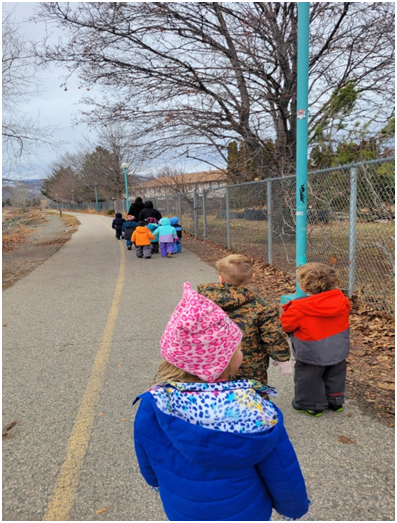
Below are some examples of the pictures that we took.
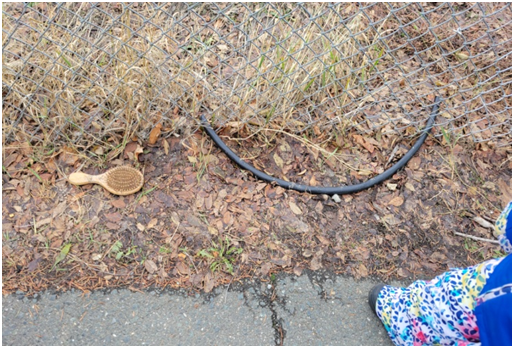
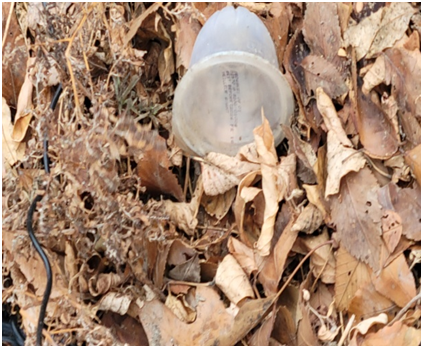
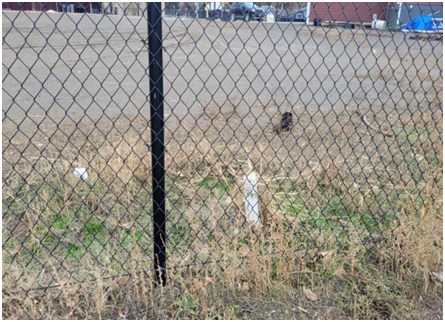
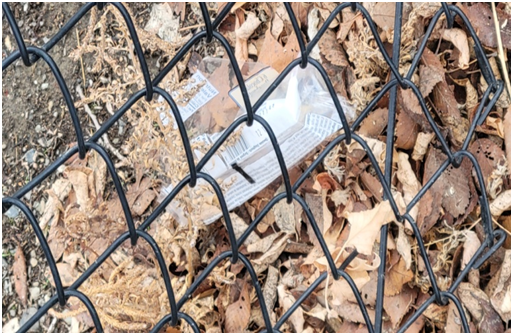
This makes me think on page 68 of the early learning framework about
“interests and inquiries, children can engage with their own ideas, theories, and inquiries in ways that are meaningful to them.”
The children are inquiring about the garbage that’s around and how it is harmful for the birds. Therefore they want to track this by pay attention to the trail and how much garbage is there. They have such a meaningful in the way around this issue that our conversations engaging with the topic at hand. How can we implement their views and thoughts around this topic so that why feel that they are being heard and making a difference?
These are thoughts that I want to implement in the new year!
This also makes me think of the page 73 of the early learning framework “how can each child contribute their gifts in relationships with adults and other children?” To me this follows how can each child contribute their gifts in relationship with adults and other children there sharing their compassion and wait for their love of birds in this moment being concerned for a creature that they are so fascinated by. There sharing their thoughts and ideas with the children around them as well as the adults that are in collaboration with them. I think it’s a true gift that they want to be involved in creating a safe environment for these birds.
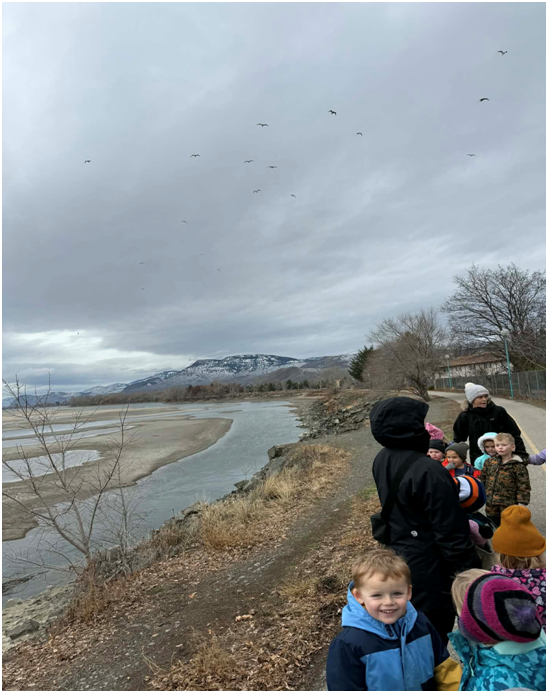
I think it would be beneficial to go even deeper with them in the subject, by trying to stay on track. What their concerns are and remembering this is about their interests in these moments is super important. But in allowing ourselves to come back to different parts of our investigation, together in these moments are just as important as the moments of discovery.
These moments is an educator making me come back to that sense of belonging with the child and the educator. This can be within our classroom, within our environments, whether it’s going for a walk along the river trail or in the backyard, seeking out birds and nests that are close by and sharing those with individuals that are around us.
There’s one last thing that I would like to share, we are able to visit the river trail again with the snow and ice being gone, we were able to have a different perspective on a thought that a child had.
One of the children “J’’ said I’ve never noticed before, but now I do, all birds eat fish. The child next to him ‘S” said oh and really? Then ‘J” answered and said I think they eat salmon.
Just the fact that we can revisit the same space over and over again and discover new ways of thinking is a real testament on how this is important in our everyday practice. This allows the children to slow down and revisit and think about the same space in a different way. Or maybe revisit a question that they had and figure it out on their own.
This leads me into the next part of our investigation is me and has been is downing how this has blown up within our classroom! I say this was such excitement because the children have really taken in a huge interest in the discussion board this week even some of the new faces in the classroom. There’s this child that’s just started about a week and a half ago he comes in with his mother in the morning and has a bit of a hard time with a new classroom, which is understandable as he is new to the classroom. He gravitates straight to the discussion board that’s hung up and looks at all the different pictures. He then asked tons of questions him and his mom stand beside the board, she reads things and points of the different photos not only is this bringing him a welcoming into the classroom but his mom also gets to see bits and pieces of what we do with the children within different points of our day.
She then in turn gets to ask me questions as I sit there and investigate alongside with the two of them this then led us into a conversation. The mom and son then talked about how they have chickens at home!
This week there are chickens posted on our board, from last week as the Children talked about all the different things about the chickens. This is where the mom and son started to talk about how he feeds the chickens at his home, how many chickens they have, what colored eggs the chickens lay. This was well other children were gathered around them as they were having these discussions with me. What a wonderful way to connect a child to other children within the classroom and feel welcomed him and his mother.
It then led to conversations with other children coming over to the port one child was very concerned that the chicken sitting on the eggs, would actually hurt the eggs? this child just being almost 3 turned around and looked at the child and said “no the mom the mom check is sitting on the eggs because she keeping them warm”.
This and then in turn gives the child the sense of a reciprocating relationship with children within the classroom this leads me to page 69 in the early learning framework.
Were talks about what does it mean to be in reciprocating relationship the children family and colleagues. I think this in turn can relate to the children within our classroom not just within ourselves but families and colleagues within the classroom.
I do have examples of the children really showing interest more than normal in the board this week and I will post some photos below.
In the first photo you see is a child that was at the table doing our mark making, in the middle of his mark making he got up and walked over to the board I had actually placed it on the floor this time.
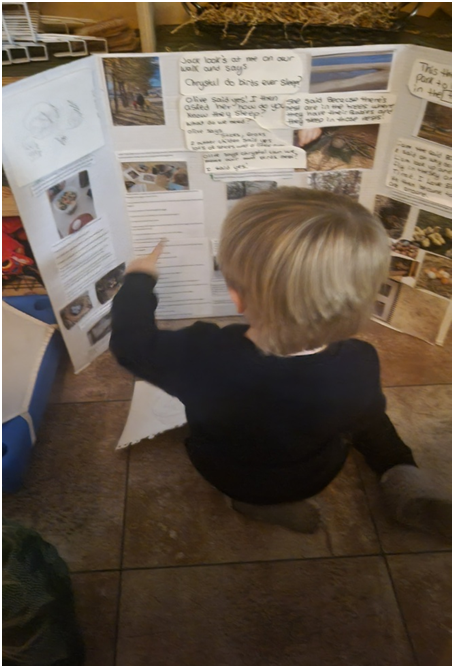
This is when he went over and started investigating different parts of it with his piece of paper he started talking about the eggs on the right-hand side of the board and also had questions about the photo of my egg from my salad.
Then he looked at his paper and held it up to the eggs on the board I listened intently with him.
I then started asking questions, do you remember when we talked about the egg from my salad? He looked at me and said “yes I do remember and Chrystal these eggs are white and these eggs are blue and these eggs are brown”.
I said yes they are why did you want to come and look at the photos of the egg on the board? “he said I wanted to make sure the egg and my picture was the same size as the eggs in the picture.”
I said that’s a great idea do you think that they look the same as the one you have on your paper.
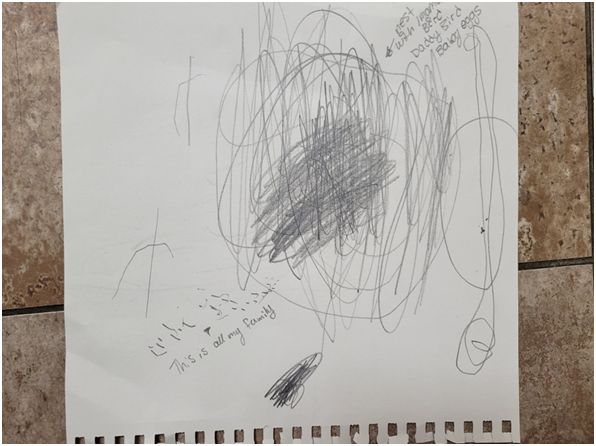
He looked up to me and said “yes” then he wanted to me to read out the discussion we had about the eggs at the snack table that day.
This make me think of “Moon bear and night butterfly on page 106 this quote”
“Drawing and telling stories means imagining, analyzing, and exploring spaces, forms, colours, words, metaphors, emotions, rhythms, and pauses, entering into a narrative dimension that is both internal and external to the self, playing on reality, fiction and interpretation. Though drawing and words are autonomous languages, for the children words and stories, silent or spoken, almost always go hand in hand or intertwine with the drawing, creating an intelligent and often poetic mosaic. (p. 15)”
This was his picture his eggs were in the center of the drawing. The little dots for his family at the bottom.
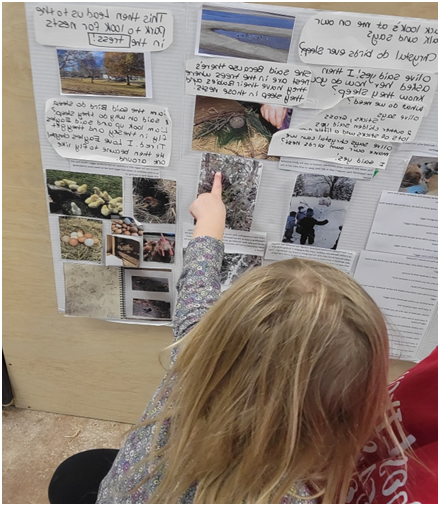
This child you see here in this photo has been a very big part of this investigation, she happened to be a way for couple of days and when she came back she noticed the board had changed she sat with me for probably a better part of 20 minutes reading and exploring the new things on the discussion board.
She was away she wanted to know all the details and all the things we have explored those two days that she wasn’t present.
I think I really enjoy the board because it brings a sense of community and its our own little story that’s put up each week the children have quite discussions around it and the children see the collaboration investigation and the meaningful work that they are doing together. Our community in the hive classroom you can see that the childen value the fact that we are listening paying attention and taking their thought seriously. This leads me to one of my pedagogical commitments that children are able capable and willing to contribute with in our classrooms community and environment.
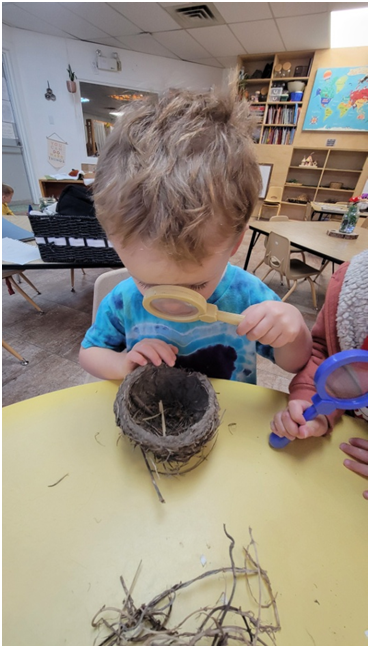
This week for our mark making one of the educators brought in a bunch of different types of nests. I first brought these out in the morning with some magnifying glasses for the children to investigate with.
The children of course random rate over to this and had so many questions. A lot of the children thought these nests were for chickens.
They ask questions such as
“what the bird made this nest”?
I said I don’t know what kind of bird to you think make this nest?
That’s when they came up with the idea that it was the chickens.
“They then asked why they were so hard”?
“They also ask what to the use to make this nest”?
Ja’ “The wind blows the sticks together that’s how the nests are together as one child explained”.
J’ said “how did the baby birds come out of the eggs”?
O’ said “well they hatch they break through the eggs and come out”.
O’ “chickens still sleep in their nests at night”?
I then looked at that child and said do you remember what we figured out about birds?
O’”She said yes they sleep”.
I then asked So are chickens birds?
O” ‘yes so they sleep, but they don’t fly and penguins or birds to but they don’t fly’’.
“One child said are these nests”?
O” “then said NO, then grabbed a magnifying glass looks closer and said yes”!
I looked at some of the children after they had a conversation that they thought it was the chicken nest.
I said to them to know how will you chicken fit in such a small nest?
The child then brought one of the nest over to the board where there were chicken pictures were, looked at the nest look at the chicken and then said “yes they would fit”.
Some of the children even said “that the nest was too big for the chickens to fit in because there was such a big hole in the middle.”
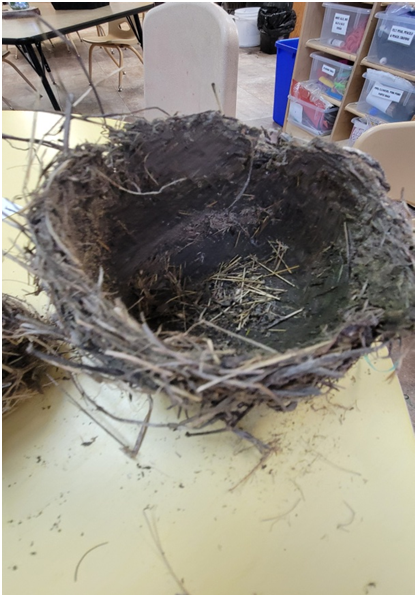
I then brought out the magnifying glasses so they could take a closer look and also allow them to touch them feel them and explore them as much as they needed.
They figured out other than grass and sticks but they don’t know why they are so hard.
I’m to continue bringing these out so that the children can explore them and see what they come up with on why they’re so hard? We will continue to work with these nests and discover different parts of them each time we look at them. I’m excited with the collaboration of materials and what the children have shown interest in and the collaboration. From fellow colleagues, parents and everybody within this community in our classroom and the center.
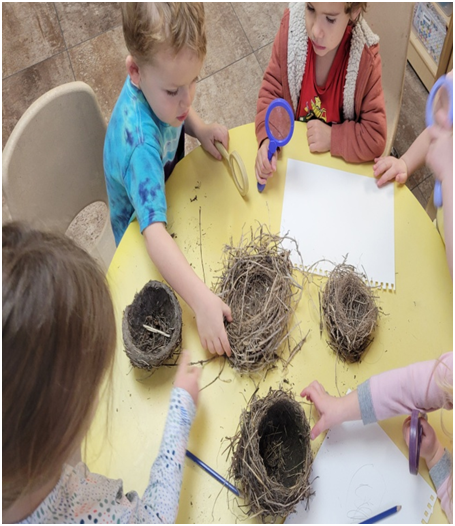
One of the children come still come in every day and tell me how many nests they find every weekend they get so excited and like right up on how many they actually get to look for.
They also go around the classroom talking to other children and explain to them how many they found over the weekend. This brings a sense of belonging community, collaboration, expressions ideas, thoughts so many things together within this collaboration of our narration within the hive classroom.
That brings me to the next part of our week we were in the backyard playing at our center our group of children was mixed with another class.
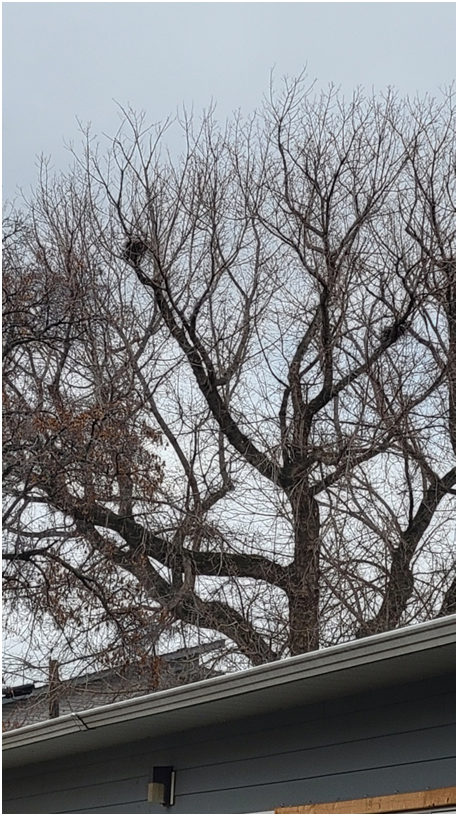
The same child that goes and looks for the nests every day with their parents as they walk to daycare noticed the tree very close to our take care again and seeing that there is four nests in the trees.
Of course we had a whole group of children looking to see where he was pointing and very elaborately counting and explaining how many he could find.
This child of course ran to me and was explaining it to me to I then was very elaborate that also got the children’s attention.
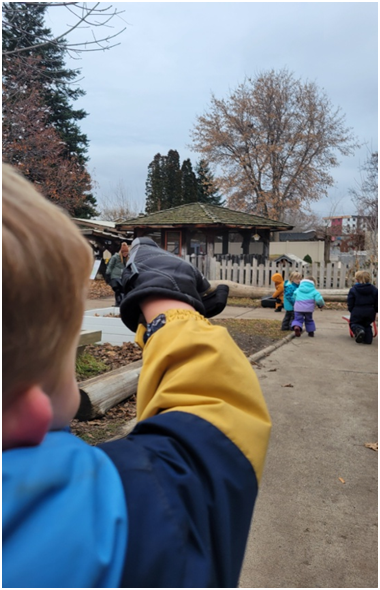
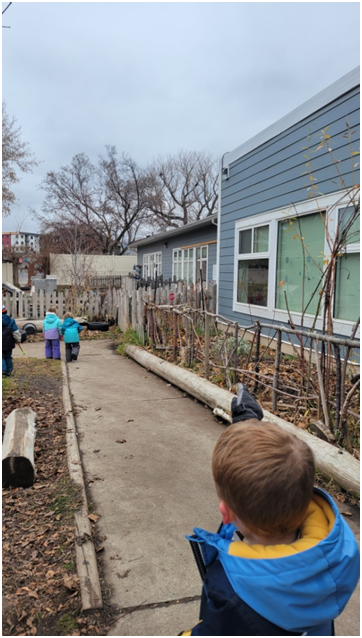
This is the exact same tree that we can see from the front of our centre, the children are starting to notice it from the back at the centre. Its amazing how each time you look at the same things. We see something different we find more nests, or we see something that we discover that’s totally new.
This brings me to looking at something more than one time slowing things down and allowing the perspective to change.
This brings me to the early childhood pedagogical network in collaboration with children. When I first watched the video I remember reading the message rate on the front page this quote on the front page stuck to me.
“Together, they consider how dialogue unfolds through gestures, materials, place, and time. They invite us to think about what becomes possible when we take seriously the idea that conversations—whether through words, gestures, images, or silence—are already part of the stories we create together.”
I completely agree with this quote the materials places in time that we are spending with these children through this narration’s are extremely important not only is it helping the children have a sense of belonging place being heard understood valued and appreciated it brings a wonderful togetherness it brings collaboration it brings in venture mystery and so much more.
This all started by one question do birds ever sleep?
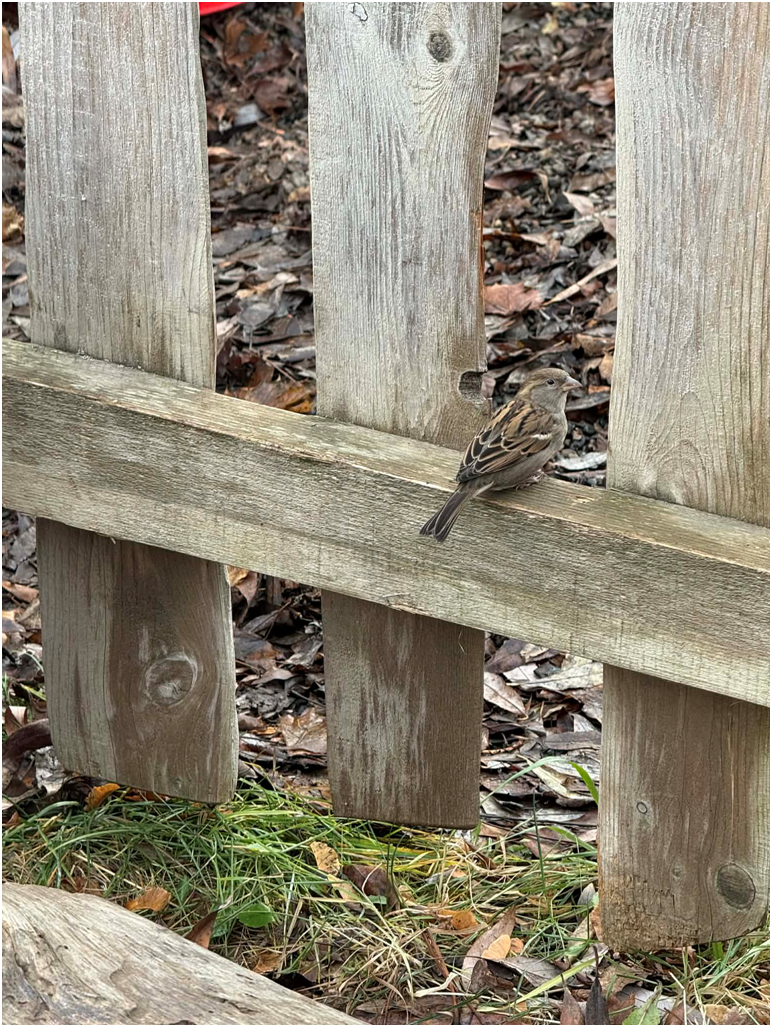
Everywhere we turn anywhere we are the children are always investigating about birds are noticing their slowing down their asking questions every time we discover something new or something old.
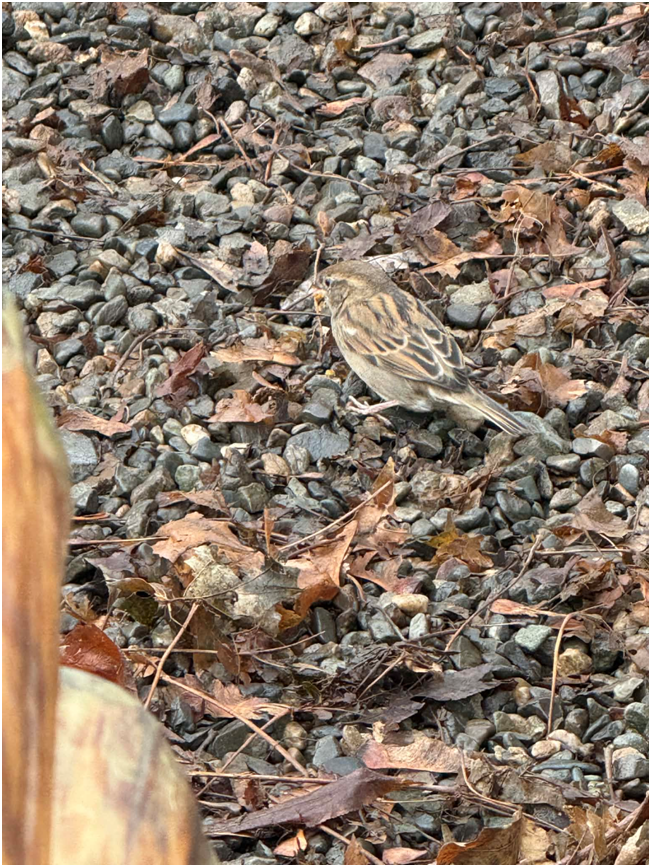
For instance we took a field trip to a different part of the yard for the children were allowed to play instead of going for a walk this day as they had really been looking forward to exploring this part of the yard.
They were able to watch the birds in this part of the yard, the children stopped, slow down and really paid attention to what they were doing.
S’ said “hey look what the birds are picking up!”
O’ “ew the schoolers snack they left”
These children were able to slow down pay attention and look at what these birds for doing with in a different space and have these creative dialogue conversations between each other such meaningful moments that build those connections. This is what Another educator shared with me from the children that day.
In conclusion I am looking forward to continuing on with this narration the other educators within the classroom want to continue on with this narration and see where it brings our class. I have been astonished on the collaboration between the other educators with in the building the parents the office staff and everybody that has been a part of this I have always been a person that brings people together and collaborates well I want to continue doing this alongside them as long as possible.
As for the drawing practice of Mark making I also want to continue this within the classroom space as a tradition that we visit each rest time for the children that want to sit talk and investigate. These meaningful moments give us opportunities to be able to collaborate with children on their ideas inventions thoughts and creativity this brings us closer together and allows us to investigate.
I am also hoping to continue on with the garbage along the river trail and try to make an impact in difference as to children’s voices should be heard within the community we will see where this narration takes us.
Chrystal